
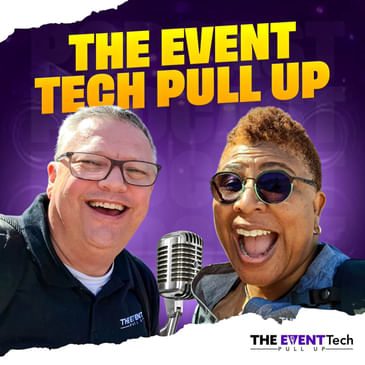
Event Tech Pull Up is back, and Keith Johnston and Tess Vismale have a few things to get off their chests.
Producing events in 2026 can feel like an extreme sport. Rising travel, hotel, food, fuel, and production costs are putting more pressure on event budgets, while attendees and organizations are making purchasing and travel decisions later. Keith and Tess talk about what that looks like on the planning side: tighter production budgets, smaller delegations, painful F&B guarantees, and registration numbers that can look terrifying right up until the doors open.
They also return to a longtime Event Tech Pull Up concern: consolidation. The conversation looks at what happens when more of the event ecosystem ends up under fewer ownership umbrellas, and what that can mean for competition, choice, pricing, and innovation.
Then there’s AI. Not AI as an email-writing assistant, but the growing wave of software that can now be built extremely quickly with AI coding tools. Keith’s concern isn’t that AI-built software is inherently bad. It’s that something can look finished long before the boring but essential work — security, authentication, confirmation emails, file storage, browser testing, edge cases, and failure handling — is actually complete.
Finally, Keith and Tess take on two event-tech habits that may need some reconsideration: automatically giving every event its own app and assuming every conference needs a year-round community. Sometimes a well-built mobile website — or a tool attendees already use, such as WhatsApp — may solve the actual problem with considerably less friction.
And if you really do want a year-round community, somebody has to manage it. That somebody should not automatically be the meeting planner because they happened to be standing nearby when the idea was approved.
The episode ends on an unexpectedly optimistic note. AI adoption is becoming less fearful and more practical. The real opportunity may not be asking AI to write one more email, but using it to take recurring administrative work off a planner’s plate so there is actually time left to plan.
What we talk about:
• Why event budgets feel tighter even when expectations haven’t changed
• How late registration is making forecasting and F&B guarantees increasingly risky
• What consolidation could mean for competition and innovation in event technology
• The difference between AI-built software and finished software
• Why security, edge cases, storage, authentication, and testing still matter
• Whether attendees actually have app fatigue — or just bad app fatigue
• When a mobile website or WhatsApp may make more sense than another event app
• Why year-round communities require real community management, not just another task for the planner